

Your Paycheck Is Shrinking And the OECD Just Proved It
Labour taxes across Europe have hit their highest level in seven years

Every spring, the Organisation for Economic Co-operation and Development (OECD), a Paris-based intergovernmental body of 38 of the world’s wealthiest nations, dedicated to shaping better economic and social policies, publishes its Taxing Wages report.
It is one of the most rigorous annual analyses of how much of your salary governments take before you ever see it. This year’s edition, Taxing Wages 2026: The Progressivity of Labour Taxation in OECD Countries, arrived with data that should matter deeply to anyone wondering whether their home country is still the right place to build a career and a life.
The short answer: for most Europeans, taxes on work went up again in 2025. And for families with children, the squeeze was sharpest.
Taxes on labour hit a seven-year high
The OECD measures something called the tax wedge, the gap between what your employer pays to employ you and what actually lands in your bank account. It captures income tax, employee social security contributions, and employer social security contributions, then subtracts any cash benefits you receive.
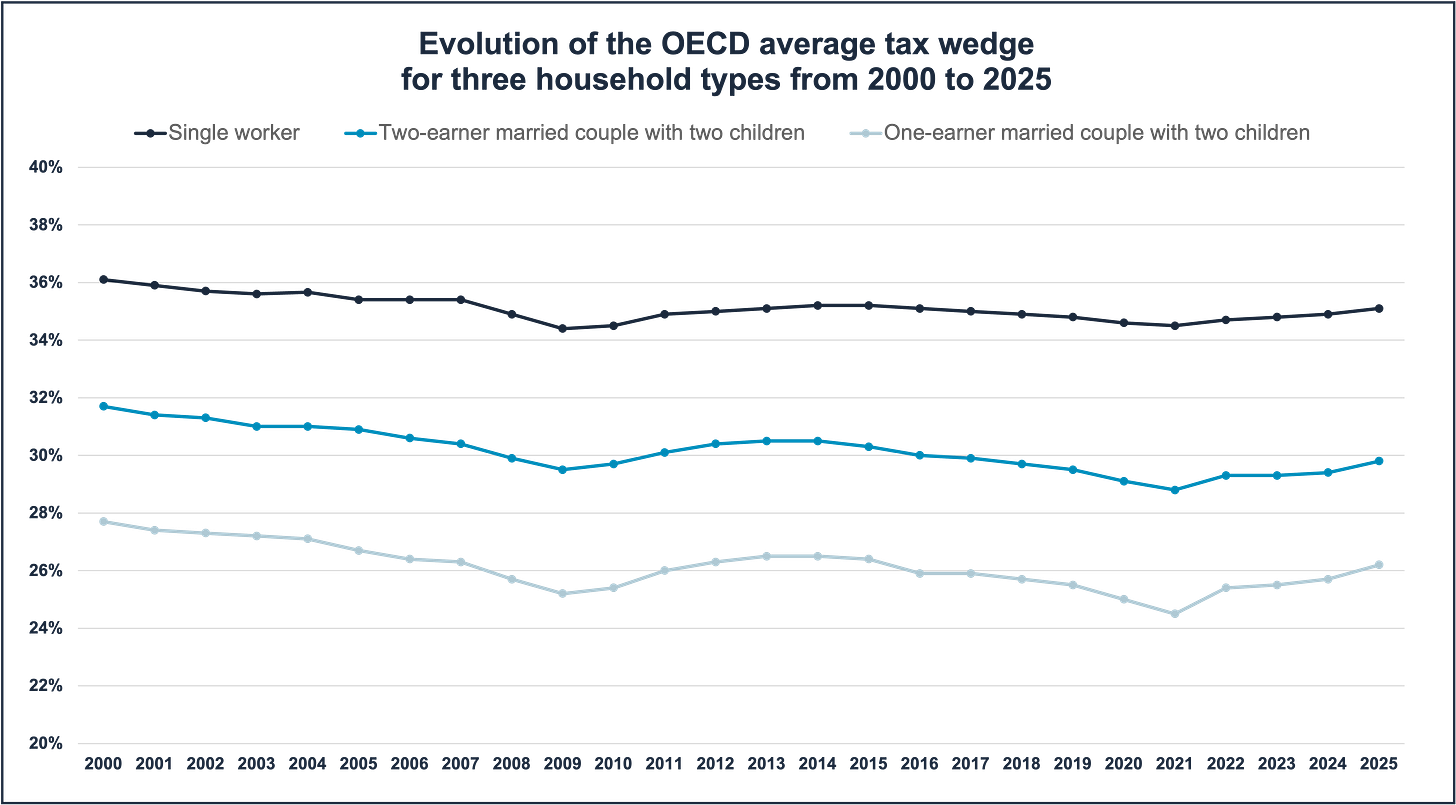
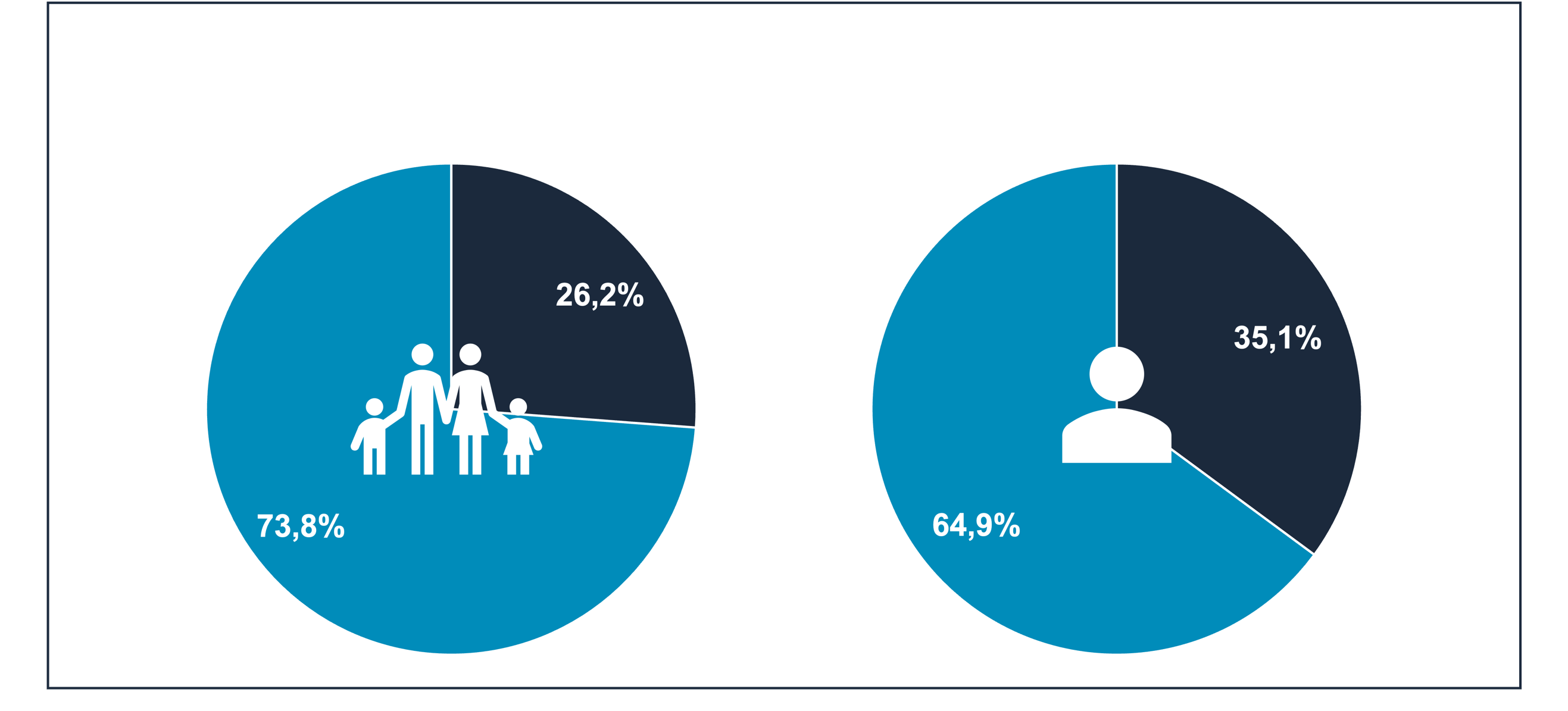
On average across the OECD, the tax wedge for all eight household types examined in the report increased in 2025 to reach their highest level since 2018. The tax wedge for a single worker earning the average wage increased in 24 out of 38 OECD countries, fell in 11 and was unchanged in 3, averaging 35.1% of labour costs.
That might sound like a modest statistical uptick. But read it plainly: in most of the world’s wealthiest countries, governments are taking a larger share of the value of your work than they did the year before. This is the fourth consecutive year in which effective tax rates on labour income rose for single average-wage workers.
Europe sits at the top of the global tax league
If you are European, according to the Tax FoundationOECD the figures become considerably more striking. The 24 countries in the OECD with the highest labour tax burden are all European. In 2025, the largest tax wedges for a single average-wage worker were observed in Belgium (52.5%), Germany (49.3%), France (47.2%), Austria (47.1%), and Italy (45.8%).
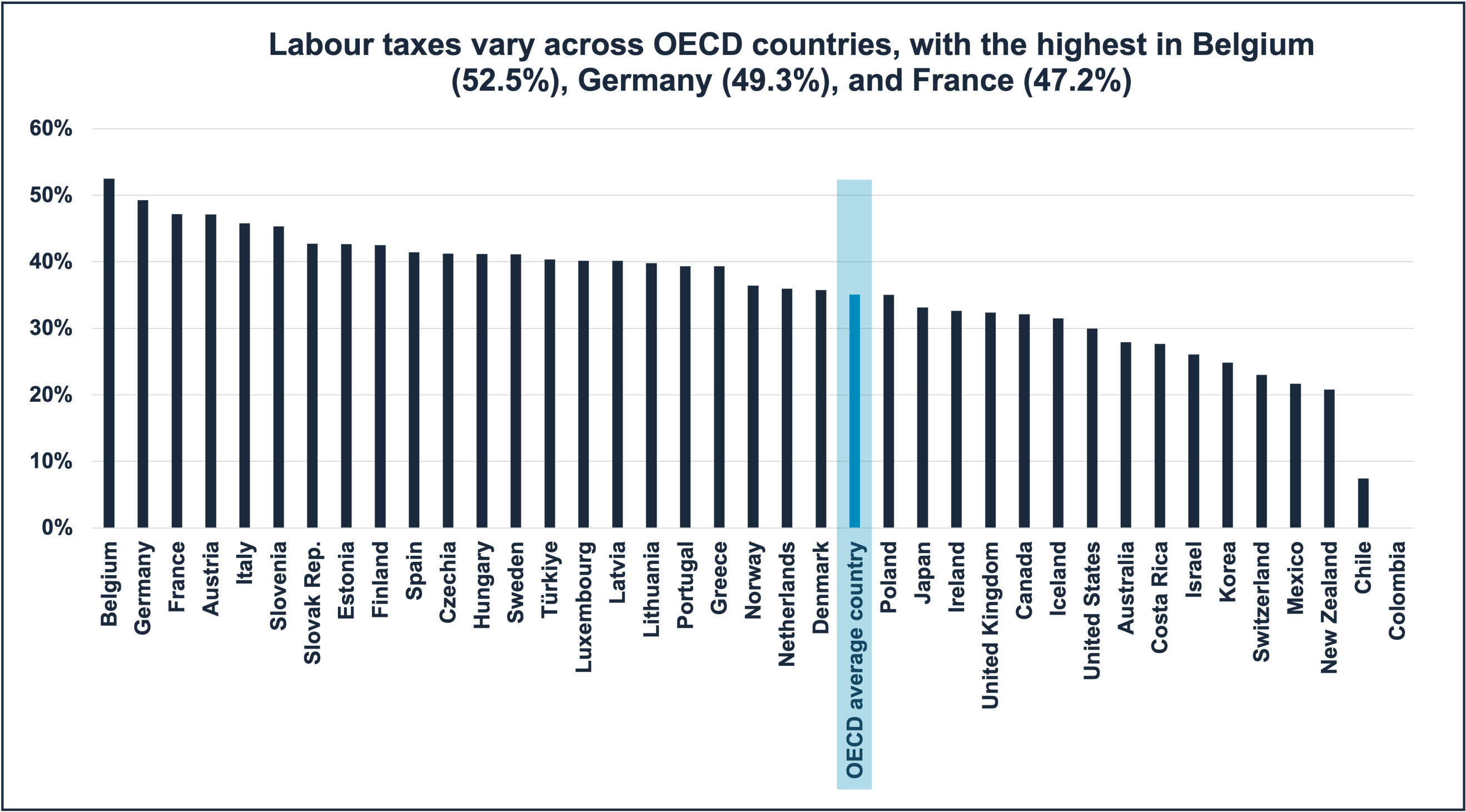
Across the European Union and the United Kingdom, single average-wage workers paid 38.9% of their labour compensation in taxes in 2025, nearly four percentage points above the broader OECD average. Put differently, European workers hand over more than a third of the total cost of employing them before receiving a single euro in take-home pay.
Workers face net personal marginal tax rates and wedges of 70% or more in several OECD countries at specific earnings levels, including Austria, Belgium, France, Italy, Luxembourg, Slovenia, Spain, and the United Kingdom. In many cases, these punishing rates kick in not only for high earners but for middle-income workers as benefits and allowances are progressively withdrawn.
Families with children are bearing the brunt
Perhaps the most significant finding in this year’s report concerns families. The largest increases were observed for households with children, which narrowed the difference in effective tax rates between households with children and those without for the second consecutive year.
For a one-earner couple with two children earning the average wage, the tax wedge rose by 0.46 percentage points on average across the OECD to 26.2%. The gap between what families with children pay versus childless single workers narrowed for the second year running, the tax advantage historically enjoyed by families is slowly eroding.
For a one-earner married couple with two children at the average wage, the tax wedge was highest in France at 39.1% and Türkiye at 40.3%. Single parents fared no better: this group saw the steepest rise of any household type in 2025.
Why are taxes going up if nobody voted for it?
This is where a quiet but consequential mechanism comes in: fiscal drag, sometimes called bracket creep. In countries where the tax schedule did not change, such as Korea and Poland, the rise in the nominal average wage between 2024 and 2025 was enough to increase the tax wedge, higher wages push workers into higher effective tax rates through the progressivity of income tax systems when thresholds rise by less than average earnings.
Some countries actively raised social security contribution rates. In Belgium, the SSC rate on employers edged up slightly in 2025. In Finland and Luxembourg, employers now bear a larger share of contributions to the social security system. In Slovenia, a 1.0 percentage point increase in the contribution rate for both employers and employees took effect in mid-2025.
Where the wedge fell and what that tells us
Not every country saw rising labour taxes. In nine of the eleven OECD countries where the tax wedge fell, the decline was mostly derived from lower personal income tax, including Australia, Denmark, Iceland, Ireland, Italy, Latvia, Portugal, Sweden, and the United States. These were deliberate policy choices, governments that decided to give workers back a greater share of their earnings.
Outside Europe, the contrast is stark. For a single worker earning the average wage, the tax wedge ranged from zero in Colombia and 7.5% in Chile to 49.3% in Germany and 52.5% in Belgium. Within Europe, Cyprus had the lowest tax burden at 26.4%, followed by Malta and the United Kingdom, both at 29.2%.
What does this mean for Europeans considering a move abroad?
The OECD data provides a structured, empirical framework for a question many Europeans are already asking themselves:
“Am I getting fair value for what I pay, and could I do better elsewhere?”
For high-earning single professionals, the case for relocation deserves serious scrutiny. If you are a single worker in Belgium, Germany, or France earning at or above the average wage, you are surrendering between 47% and 52% of total labour costs to the state. Moving to a lower-wedge country, whether within the EU or beyond it, can represent an improvement in net income of tens of thousands of euros annually.
For families with children, the picture is more nuanced but the trend is clear. The historic tax advantage of parenthood is being gradually dismantled across high-tax Europe. Countries with structurally lower family burdens, including Ireland, Portugal, and several non-European destinations are increasingly attractive by comparison.
For single parents, the findings are especially concerning. This group faced the steepest rise in effective tax rates in all of 2025. For single mothers or fathers building a career, the combination of reduced cash transfers and higher effective income tax rates creates a genuine financial ceiling in high-tax European economies.
The fiscal drag factor deserves special attention for anyone expecting a pay rise. In countries that do not regularly adjust income tax thresholds to match wage growth, a salary increase may deliver far less improvement in living standards than anticipated, a silent, automatic transfer to government.
Will this accelerate European emigration?
Tax alone is rarely the single reason someone picks up and moves. Healthcare, language, culture, family ties, and political stability all weigh in the balance. But taxes are increasingly part of the calculation and this data suggests the pressure is building rather than easing.
There are already observable trends worth watching. Portugal’s reformed but still competitive non-habitual residency options, Spain’s Beckham Law for skilled workers, Malta and Cyprus’s comparatively low wedges within the EU, and the continued draw of the UAE, Singapore, and other zero or low-income-tax jurisdictions all signal that global competition for mobile talent is intensifying.
As the OECD itself notes, a higher tax wedge tends to reduce incentives to work and hire by reducing take-home pay and increasing employers’ labour costs. What the report does not say but what the data implies is that in an era of remote work, cross-border employment, and streamlined visa pathways, those disincentives are no longer purely theoretical. For a growing number of European workers, the next step is not to lobby their government for tax reform. It is to start researching where else they might live.
The bottom line for Relocation Insider readers
The Taxing Wages 2026 report is not a manifesto. It is a data exercise. But its conclusions carry a clear message for anyone weighing a move abroad:
· Labour taxes in Europe are at their highest in seven years and trending upward
· The heaviest burdens fall on single workers in Belgium, Germany, France, Austria, and Italy, countries that together represent Europe’s most skilled and internationally mobile workforce
· Families with children are losing ground, with the tax advantage of parenthood shrinking for two consecutive years across the OECD
· Some European countries are actively cutting taxes like Ireland, Portugal, Denmark, and Sweden prove the trend is a policy choice, not an inevitability
· Outside Europe, the contrast in take-home pay is often dramatic, and improving
If you have ever thought a move abroad might make financial sense, 2026 may be the year the numbers finally confirm: you were right to wonder.